














Proactive safety management that prevents workplace incidents

Chasing incidents after they happen keeps you one step behind the risks that matter. Every investigation report represents a failure of prediction, every corrective action a missed opportunity for prevention.

For EHS professionals who see themselves as protectors keeping people safe, this constant firefighting creates the sleepless nights that anticipatory safety management could prevent. Ideagen's embedded, contextual and pervasive AI intelligence with behaviour-based safety tracking and risk assessment tools delivers 15-30% reduction in safety incidents through proactive intervention, turning safety data into strategic advantage.

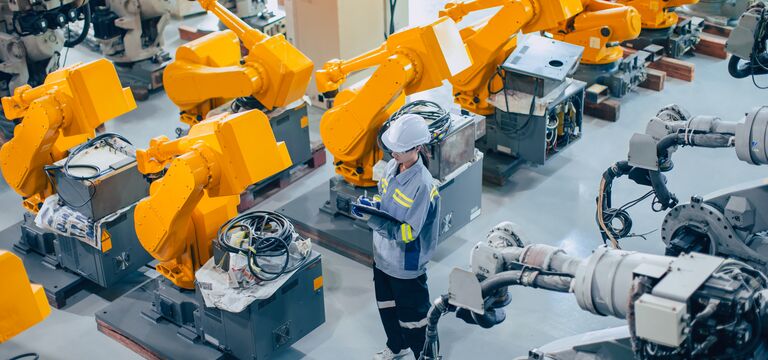
COLOUR-IMAGE_female-contraction-worker-laptop_feb26
COLOUR-IMAGE_two-men-looking-at-fixture-in-factory_apr26

Proactive safety management with embedded AI

Real safety leadership happens in the space between risk and incident. Ideagen's proactive safety management transforms how you identify, predict and prevent safety issues before they escalate. Using embedded and pervasive AI intelligence with predictive analytics, you move from rear-view mirror compliance to a forward-thinking safety approach with forward-looking performance that demonstrates genuine strategic value. 

Our AI works as your early warning system: predictive risk management identifies potential safety issues before they become incidents, delivering 15-30% reduction in safety incidents through proactive intervention, whilst intelligent summarisation distils complex safety data into clear insights that guide predictive safety strategies and prevention. 

COLOUR-IMAGE_power-plant-audit-worker_feb26

Only responding to incidents after they occur

Waiting for accidents to reveal safety gaps puts your people at unnecessary risk whilst positioning EHS as a cost centre rather than strategic protection. When you're always investigating what went wrong, you're missing the patterns that predict what's about to go wrong. 

Our proactive safety management and anticipatory safety management system with AI continuously monitor safety performance indicators, analysing patterns from inspections, observations and near-miss data to identify potential hazards before they result in incidents. Behaviour-based safety programmes track regular observations and feedback to change human behaviour systematically, whilst hazard analysis software provides centralised repository for all critical job hazard information with assessment frequency controls. AI spots trends across your entire safety ecosystem that manual analysis misses, enabling preventive safety measures and action that keeps incidents from happening whilst demonstrating measurable ROI to leadership. 

COLOUR-IMAGE_two-colleagues-looking-over-a-tablet-in-factory_apr26

Inability to predict and prevent future incidents

Operating without predictive capabilities means flying blind into tomorrow's safety challenges. Traditional programmes tell you what happened yesterday, but tomorrow's risks are forming in the data you're collecting right now. 

Ideagen's AI predictive risk management analyses comprehensive datasets from observations, incident reports and inspections to identify hidden risks and predict future safety issues. Survey-driven risk assessment solutions analyse risks and develop mitigation plans, whilst management of change (MoC) processes evaluate potential risks before implementation. AI-enhanced semantic search helps you find similar historical patterns instantly, whilst automated workflows ensure preventive safety measures get implemented before problems escalate. This forward-thinking safety approach positions you as continuous improvement leader rather than compliance officer. 

COLOUR-IMAGE_two-workers-wearing-hi-vis-coats-holding-devices_apr26

Missing near-miss data that could prevent accidents

Near-misses are intelligence goldmines, but they often disappear into spreadsheets or never get reported at all. When non-EHS personnel witness critical safety intelligence but struggle with complex reporting procedures, you lose the insights that prevent major incidents. 

Our mobile EHS platform with AI captures near-miss intelligence at the moment of truth with photos, voice notes and location data—working with or without connectivity and syncing automatically when connection returns. Intelligent validation ensures data quality whilst AI analysis transforms scattered reports into comprehensive risk patterns. Ergonomics management tools quantify risk factors like repetitive motion and awkward postures using NIOSH Lifting Equation and Strain Index methodologies. Workers get instant feedback showing how their reports drive real prevention, creating the reporting culture that catches problems before they catch you. 

Trusted by EHS professionals who demand control

Ideagen removes the complexity so your teams can prevent incidents, not just document them.

BADGE-G2_Q4-fall-2025-ideagen-quality-management_QualityManagement(QMS)_Leader_Leader_sep25
BADGE_G2-summer-2025-ideagen-quality-management-leader-leader_jun25
BADGE_G2-spring-2025-quality-management-QMS-leader_mar25
BADGE-G2_Q4-fall-2025-ideagen-quality-management_MedicalQMS_Leader_Europe_Leader_sep25
BADGE_G2-summer-2025-ideagen-quality-management-leader-emea-leader_jun25
BADGE_G2-spring-2025-quality-management-medical-QMS-leader-EMEA-leader_mar25

Request a demo today

EHS professionals at high-risk operations choose Ideagen's proactive safety management when preventing incidents matters more than investigating them.

Users report 15-30% reduction in safety incidents through predictive interventions and 50-70% faster response times to emerging risks—transforming their role from reactive firefighter to strategic risk prevention leader. 

Reducing the operational burden of odor complaint investigation at waste & wastewater facilities

How better data can cut investigation time, resolve complaints faster and recover staff hours

The growing challenge of community odor management for publicly operated waste & wastewater facilities

Why complaint volumes are rising - even when operations are sound

Why 'filling conservatively' is not a safe option

Every March 1, EHS teams file their Tier II reports under EPCRA Section 312 — most with data they've spent weeks trying to reconcile. This guide covers what the report requires, where state obligations add complexity and the filing mistakes that create compliance gaps even when teams think they're covered.

US Department of Energy

The DOE's Hanford Site in Washington State is one of the most complex nuclear clean-up projects in the world.

Maximizing container-level accuracy with RFID

Container-level accuracy isn't just a compliance prerequisite. It's the foundation of better EHS decision-making.

Your EHS data is trying to tell you something. Are you listening?

Post-event reflection from Safety on the Edge

RFID vs. barcode tracking in chemical inventory management

Is your tracking system built for the scale you're operating at? The question isn't whether barcodes work. It's whether they're working hard enough for your operation.

Why global chemical compliance breaks down at scale and what to do about it

Every year, sustainability and EHS teams at global manufacturers face the same reckoning: REACH is due, RoHS submissions need filing, and the data simply isn't ready.

How RFID enhances the chemical management system lifecycle

Manual chemical tracking creates lifecycle blind spots. Discover how RFID delivers the continuous visibility regulated environments demand.

Why chemical management is an operations problem, not just a compliance one

How to shift chemical management from a compliance burden to an operational asset.