














Workplace vibration monitoring for injury prevention

Nothing threatens operational continuity quite like unexpected structural damage claims from neighboring properties.

Your maintenance teams are logging readings they don't fully understand during occupational vibration assessment, vibration data lives across disconnected systems, and communities are growing closer to industrial sites whilst regulatory standards tighten across Europe. Static monitoring leaves you vulnerable to equipment failures and worker exposure risks whilst traditional approaches create dangerous blind spots that lead to costly shutdowns you could have prevented.

Ideagen transforms proven workplace vibration monitoring technology with embedded, contextual, and pervasive AI intelligence that identifies risks before they impact operations.

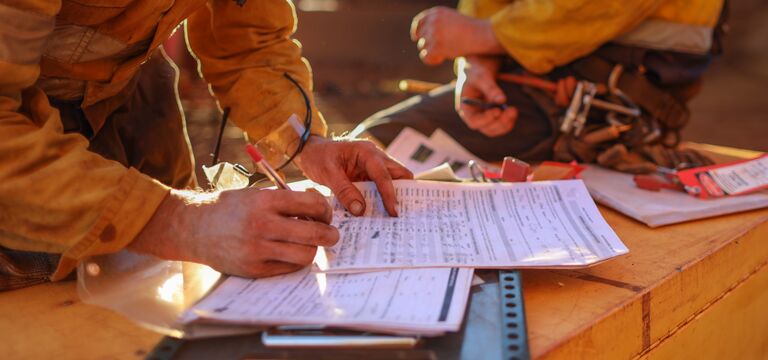
COLOUR-IMAGE_automotive-male-mechanic-using-angle-grinder-on-car-body_feb26
COLOUR-IMAGE_male-construction-worker-yellow_feb26

Ideagen's intelligent workplace vibration monitoring system

Real vibration control happens when monitoring works as precisely as your operations demand.

Our Vibration Monitoring Terminal (VMT) delivers continuous tri-axial measurement with extensive dynamic range from 2 μm/s to over 300 mm/s, built to compliance with ISEE, DIN 45669-1, and ISO 2631 standards that European operations require. 

Your maintenance teams aren't vibration specialists, yet they're the ones checking equipment whilst inputting critical data for vibration exposure tracking that determines compliance status and worker safety.

Enhanced semantic search finds relevant historical data even when exact terminology doesn't match, whilst automated workflow orchestration handles multi-step reporting and escalates issues based on your operational patterns.

Industry-leading sensors and software provide unmatched vibration visibility across your entire site and surrounding areas, seamlessly integrating local weather information to deliver tailored, actionable insights whilst delivering 50-70% faster response times to emerging risks. 

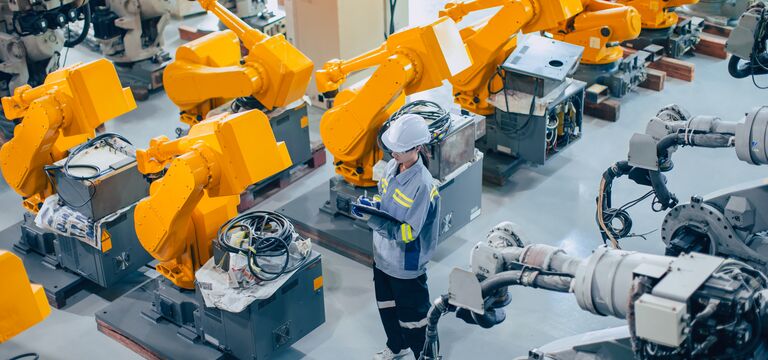
COLOUR-IMAGE_construction-workers-machine-check_Apr26

Fragmented vibration data from various equipment and tools

Vibration readings scattered across different systems whilst equipment damage costs mount and comprehensive occupational vibration assessment becomes impossible. Traditional approaches mean working with incomplete pictures whilst structural damage risks develop undetected until neighbouring properties suffer damage.

An integrated monitoring platform consolidates data from all equipment with real-time capture that runs with minimal user attention, whilst our embedded and contextual intelligence provides insights for informed decision-making.

Our community portals share easily understood data with local communities to build trust and demonstrate responsibility. 

COLOUR-IMAGE_mining-work-machinery_Apr26

Reactive maintenance without predictive intelligence

Traditional maintenance approaches leave operations vulnerable to breakdowns whilst schedules operate on guesswork rather than data-driven intelligence. Static data creates blind spots where equipment failures develop whilst hand-arm vibration syndrome prevention becomes critical as risks accumulate undetected.

Continuous vibration health monitoring delivers uninterrupted vibration data with instant alerts when thresholds are exceeded, whilst AI agents analyse patterns to identify maintenance needs before problems escalate.

System compliance with European standards (DIN 45669-1, ISO 2631) ensures regulatory confidence whilst delivering 30-50% reduction in routine documentation tasks. 

COLOUR-IMAGE_welding_feb26

Inadequate vibration exposure tracking for workers

Manual exposure logs and fragmented vibration health monitoring create dangerous gaps in occupational health management whilst leaving operations vulnerable during HSE inspections. Traditional approaches mean uncertainty about worker exposure whilst effective hand-arm vibration syndrome prevention becomes essential as claims mount across European jurisdictions.

A VMT system provides accurate, uninterrupted tri-axial measurements in compliance with European standards whilst reducing risks of structural damage and physical harm. AI agents streamline comprehensive vibration exposure tracking whilst our Incident Investigation Agent gathers relevant data and suggests investigation steps, ensuring audit-ready documentation. 

Trusted by environmental professionals who get results

Ideagen removes the complexity so your teams can prevent incidents, not just document them.

BADGE-G2_Q4-fall-2025-ideagen-quality-management_QualityManagement(QMS)_Leader_Leader_sep25
BADGE_G2-summer-2025-ideagen-quality-management-leader-leader_jun25
BADGE_G2-spring-2025-quality-management-QMS-leader_mar25
BADGE-G2_Q4-fall-2025-ideagen-quality-management_MedicalQMS_Leader_Europe_Leader_sep25
BADGE_G2-summer-2025-ideagen-quality-management-leader-emea-leader_jun25
BADGE_G2-spring-2025-quality-management-medical-QMS-leader-EMEA-leader_mar25

Request a demo today

Environmental managers at construction, mining, and industrial operations across Europe choose Ideagen's platform with pervasive AI intelligence when vibration violations can shut down production and structural damage threatens neighbouring properties.

When community relations determine your licence to operate, you need workplace vibration monitoring intelligence that prevents problems rather than just measures them. 

Idaho National Laboratory (INL)

INL is one of Idaho's largest employers and the nation's leading center for nuclear energy research and development. Its work supports the US Department of Energy's mission to discover the solutions to power and secure America's future. Quality assurance and regulatory compliance are central to the lab's operations.

Reducing the operational burden of odor complaint investigation at waste & wastewater facilities

How better data can cut investigation time, resolve complaints faster and recover staff hours

The growing challenge of community odor management for publicly operated waste & wastewater facilities

Why complaint volumes are rising - even when operations are sound

Why 'filling conservatively' is not a safe option

Every March 1, EHS teams file their Tier II reports under EPCRA Section 312 — most with data they've spent weeks trying to reconcile. This guide covers what the report requires, where state obligations add complexity and the filing mistakes that create compliance gaps even when teams think they're covered.

US Department of Energy

The DOE's Hanford Site in Washington State is one of the most complex nuclear clean-up projects in the world.

Maximizing container-level accuracy with RFID

Container-level accuracy isn't just a compliance prerequisite. It's the foundation of better EHS decision-making.

Your EHS data is trying to tell you something. Are you listening?

Post-event reflection from Safety on the Edge

RFID vs. barcode tracking in chemical inventory management

Is your tracking system built for the scale you're operating at? The question isn't whether barcodes work. It's whether they're working hard enough for your operation.

Why global chemical compliance breaks down at scale and what to do about it

Every year, sustainability and EHS teams at global manufacturers face the same reckoning: REACH is due, RoHS submissions need filing, and the data simply isn't ready.

How RFID enhances the chemical management system lifecycle

Manual chemical tracking creates lifecycle blind spots. Discover how RFID delivers the continuous visibility regulated environments demand.