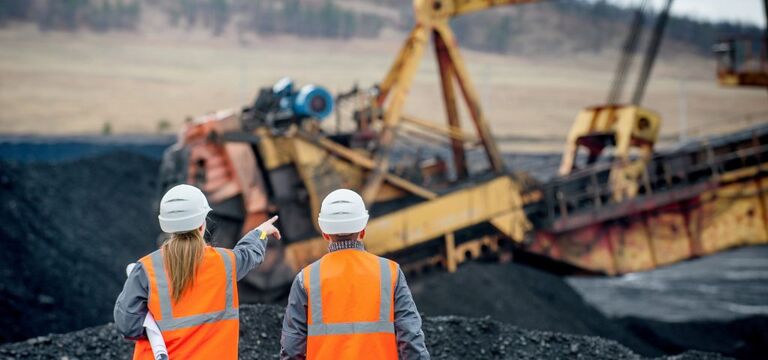



MSHA compliance for comprehensive mine site safety
The Mine Safety and Health Administration (MSHA) was established under the Federal Mine Safety and Health Act of 1977. MSHA is responsible for enforcing safety and health regulations across all mining operations in the United States — including surface and underground mines, as well as milling operations — with the goal of preventing death, disease, and injury among miners and contractors working on mine sites.
Breadth of coverage
Unlike OSHA, which applies broadly across industries, MSHA has jurisdiction over every mine in the United States — regardless of size, commodity, or number of employees. This means that even small mining operations with a single employee are subject to MSHA's mandatory health and safety standards. The regulation covers not only direct mine employees but also contractors and their workforces who perform services at or on behalf of a mine site
- Mandatory compliance for all U.S. mining operations
- Covers surface mining, underground mining, and milling operations
- Applies to mine operators and all contractors on site
Protecting every person on the mine site
MSHA places the responsibility for mine site safety squarely on the mine operator — including accountability for the safety of contractors working on their property. Compliance with MSHA standards ensures that operators actively identify and control hazards, maintain current training records, and provide a working environment where every person on site — direct employee or contractor — is protected.
- Reduced incidents and fatalities across the workforce
- Structured hazard identification and control processes
- Clear safety accountability for mine operators and contractors alike
A non-discretionary compliance standard
MSHA standards are mandatory — not advisory. Mine operators are required by law to meet the applicable health and safety standards for their mine type, and failure to do so can result in citations, withdrawal orders, and civil penalties. Repeat or willful violations carry significantly higher penalties and can trigger pattern-of-violations designations that affect the mine's ability to operate. Meeting MSHA's standards is not just a safety investment — it is a legal obligation that applies to every shift, every contractor, and every area of the mine.
- Legal compliance across surface and underground operations
- Avoidance of citations, withdrawal orders, and civil penalties
- Reduced exposure to pattern-of-violations designations
Fewer incidents. Lower costs. Better operations.
MSHA compliance is designed to prevent the incidents that cost mining operations the most — in human terms, in production downtime, and in the financial consequences that follow. Operations that maintain rigorous compliance programs — with current training records, consistent hazard controls, and reliable contractor management — consistently experience lower incident rates and the operational stability that comes with them.
- Reduced workers' compensation costs and associated premiums
- Lower production downtime from incident-related disruptions
- Improved workforce morale and contractor confidence on site
Meeting the requirements of MSHA
Meeting MSHA's mandatory health and safety standards requires consistent processes for hazard identification, training management, contractor oversight, and compliance documentation. Ideagen Workforce Safety provides mining operations with the tools to manage those requirements efficiently — replacing manual, fragmented processes with a centralized platform that keeps compliance current and audit-ready at all times.
Meeting the requirements of MSHA
MSHA requirements |
Ideagen Workforce Safety solution |
Conduct regular workplace examinations to identify and address safety and health hazards before each shift and during mining operations. |
Ideagen Workforce Safety enables mine operators to systematically log, categorize, and assign corrective actions for identified hazards — creating a complete, auditable record of workplace examinations. |
Ensure all miners and contractors receive task training, new miner training, and annual refresher training in accordance with Part 46 or Part 48 standards, and maintain verifiable training records. |
The platform maintains individual training and certification records for all miners and contractors, automates expiry alerts, and provides a centralized record that satisfies MSHA's documentation requirements. |
Manage contractor compliance — mine operators are accountable for the safety of contractors working on their property, including verifying that contractors meet applicable training and certification requirements before beginning work. |
Ideagen Workforce Safety automates contractor credential verification, manages digital inductions, and maintains a complete contractor compliance record — ensuring no contractor reaches the mine site without verified qualifications and completed training. |
Implement and document hazard controls, including the use of engineering controls, administrative controls, and personal protective equipment, and maintain records of their effectiveness. |
The platform supports the documentation and tracking of hazard controls, linking them to specific hazard records and enabling ongoing monitoring of control effectiveness across the mine site. |
MSHA requirements
Conduct regular workplace examinations to identify and address safety and health hazards before each shift and during mining operations.
Ensure all miners and contractors receive task training, new miner training, and annual refresher training in accordance with Part 46 or Part 48 standards, and maintain verifiable training records.
Manage contractor compliance — mine operators are accountable for the safety of contractors working on their property, including verifying that contractors meet applicable training and certification requirements before beginning work.
Implement and document hazard controls, including the use of engineering controls, administrative controls, and personal protective equipment, and maintain records of their effectiveness.
Ideagen Workforce Safety solution
Ideagen Workforce Safety enables mine operators to systematically log, categorize, and assign corrective actions for identified hazards — creating a complete, auditable record of workplace examinations.
The platform maintains individual training and certification records for all miners and contractors, automates expiry alerts, and provides a centralized record that satisfies MSHA's documentation requirements.
Ideagen Workforce Safety automates contractor credential verification, manages digital inductions, and maintains a complete contractor compliance record — ensuring no contractor reaches the mine site without verified qualifications and completed training.
The platform supports the documentation and tracking of hazard controls, linking them to specific hazard records and enabling ongoing monitoring of control effectiveness across the mine site.
MSHA FAQs
Who does MSHA regulate?
MSHA has jurisdiction over all mining and milling operations in the United States, regardless of size or number of employees. This includes surface mines, underground mines, and processing facilities, as well as all contractors and their employees who work at or on behalf of a mine site.
How often does MSHA inspect mine sites?
MSHA is required by law to inspect every underground mine at least four times per year and every surface mine at least twice per year. Operations with a history of citations or significant safety concerns may be inspected more frequently.
Are contractors subject to MSHA standards?
Yes. Contractors working at or on behalf of a mine are subject to the same MSHA health and safety standards as the mine's direct employees. The mine operator is responsible for ensuring that contractors comply with applicable standards and that their training and certification records meet MSHA's requirements.
How can mine operators demonstrate compliance during an MSHA inspection?
Operators are expected to produce training records, workplace examination logs, hazard control documentation, and contractor compliance records upon request during an inspection. Maintaining centralized, current documentation is one of the most effective ways to demonstrate compliance and reduce the risk of citations.
What is the difference between MSHA Part 46 and Part 48 training?
Part 46 covers training requirements for miners at surface mines that extract sand, gravel, crushed stone, surface clay, colloidal phosphate, or surface limestone. Part 48 covers training at all other mines, including underground operations. Both parts establish requirements for new miner training, newly hired experienced miner training, new task training, annual refresher training, and hazard training.
What are the consequences of an MSHA citation?
MSHA citations can result in civil penalties that vary based on the severity of the violation, the operator's history of violations, and the degree of negligence involved. Imminent danger orders require the immediate withdrawal of all miners from the affected area. Repeated significant and substantial violations can result in a pattern of violations designation, which triggers additional enforcement actions.
How does Ideagen Workforce Safety support MSHA compliance?
Ideagen Workforce Safety provides mining operations with a centralized platform for managing contractor credentials, training records, workplace examinations, and compliance documentation. By automating the tracking and verification steps that are most prone to gaps in manual processes, the platform helps mine operators maintain a current, audit-ready compliance record — making MSHA inspections and internal reviews significantly less time-consuming to prepare for.