

Talk to one of our wearable safety experts to find out how Ideagen can help your organisation monitor exposure, manage compliance and prevent occupational injury.
Wearable safety for high-risk workplaces
Monitor, analyse and prevent vibration, noise, dust and proximity risks — automatically, in real time.

One connected system from first exposure to boardroom report
Ideagen Wearable Safety gives organisations a complete view of workplace health risk through three integrated steps:
- Monitor: workers wear lightweight devices that track personal exposure to vibration, noise, dust and proximity risk throughout every shift
- Analyse: cloud-based analytics aggregate individual data across the workforce, identifying who is approaching exposure limits and where risk is concentrated
- Prevent: real-time alerts, automated reports and audit-ready documentation mean organisations can act on risk immediately and demonstrate compliance without manual effort
Built for industries where occupational risk is part of the job
Wearable safety technology is most critical where workers face daily, cumulative exposure to physical health hazards. Ideagen Wearable Safety is deployed across the following sectors.
Construction
Workers face daily exposure to vibration from breakers and grinders, respirable dust from cutting and drilling, proximity hazards from plant and vehicles and high ambient noise, often all on the same site.
Manufacturing and engineering
Repeated use of power tools across long shifts means vibration and noise exposure accumulates fast, and without continuous personal monitoring it is difficult to identify who is approaching legal limits.

Utilities and infrastructure
Dispersed worksites and limited on-the-ground supervision make centralised, real-time exposure monitoring essential for duty holders managing vibration, dust and proximity risk across multiple locations.
Mining and quarrying
Dust, noise and vibration exposure in mining and quarrying are among the most severe in any UK sector and the ability to generate defensible individual exposure records is critical for compliance and legal protection.
The scale of occupational health risk
2m+
Workers in the UK exposed to noise levels that risk long-term hearing damage
100%
Noise-induced hearing loss is preventable
1 in 10
Construction workers develop hand-arm vibration syndrome from occupational exposure
17%
Of workers exposed to noise levels above safe limits go on to suffer hearing loss, tinnitus or related conditions
Protecting workers from the risks that matter most

Hand-arm vibration
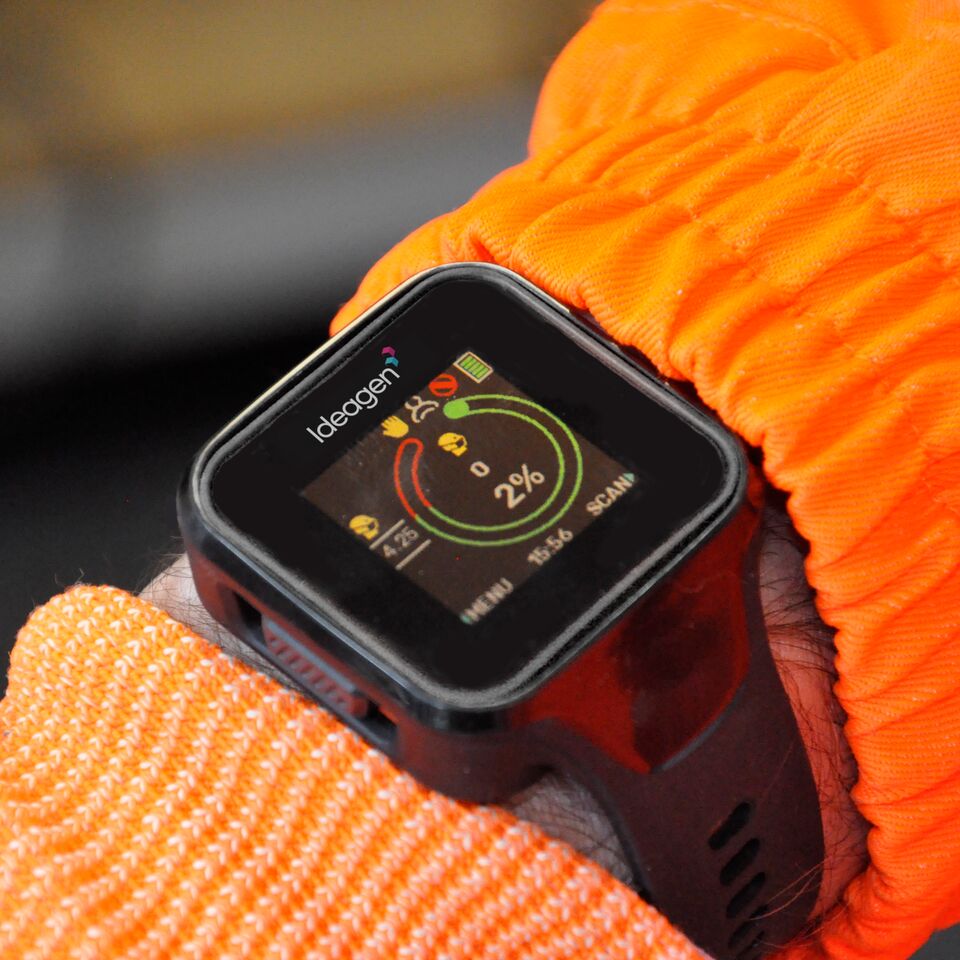
Hand-arm vibration syndrome (HAVS) is caused by regular, prolonged use of vibrating tools and equipment. Damage to nerves, blood vessels and joints in the hands and arms is cumulative and irreversible. Ideagen Wearable Safety monitors individual vibration exposure in real time against legally defined EAV and ELV thresholds, alerting workers before limits are reached and automating the exposure records that manual HAV passports have traditionally required.

Noise-induced hearing loss
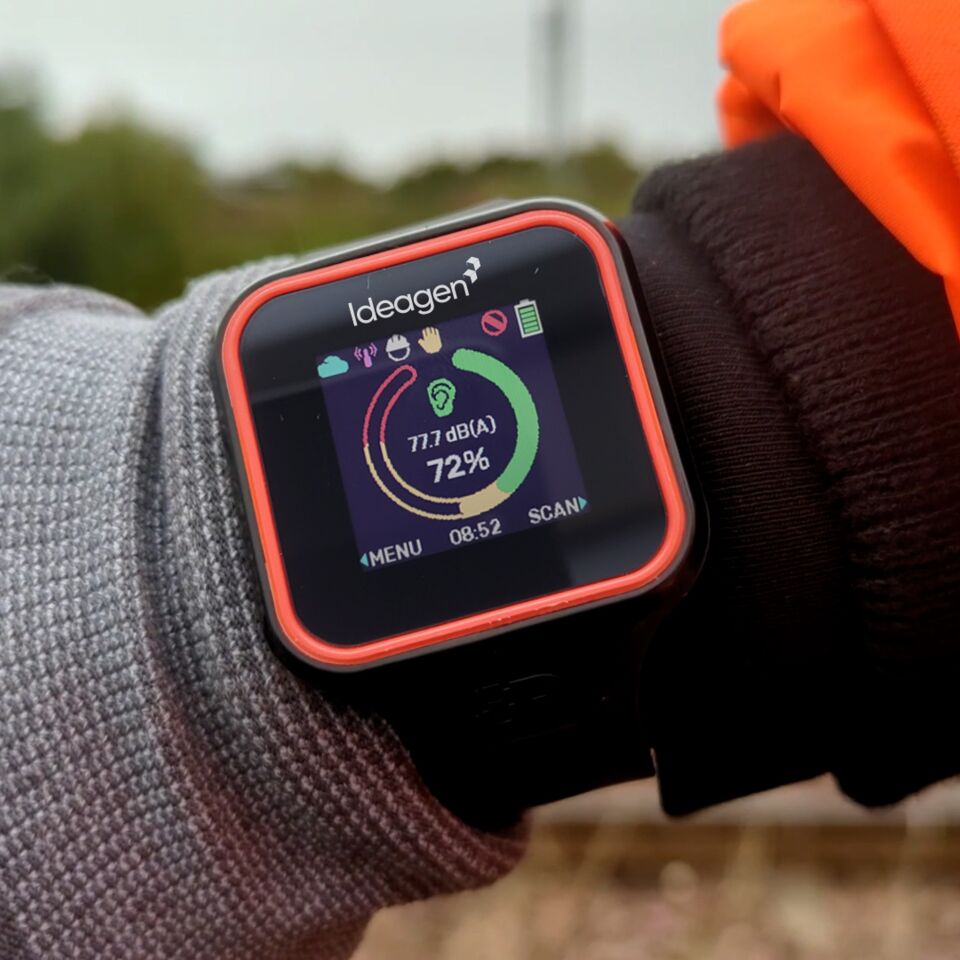
Noise-induced hearing loss is the most common occupational disease in the UK and is entirely preventable. Ideagen Wearable Safety monitors personal noise exposure from inside the ear, providing a precise measure of the noise actually reaching a worker's hearing rather than the ambient level in the area. Real-time alerts notify workers when they approach their daily exposure limits, and cumulative exposure data is transmitted automatically to the analytics platform for reporting and audit.

Dust exposure
Airborne dust generated by cutting, grinding, drilling and blasting causes serious and permanent lung damage. Respirable crystalline silica is a Group 1 carcinogen, and long-term uncontrolled exposure causes silicosis, COPD and lung cancer. Ideagen Wearable Safety provides real-time personal dust monitoring at the breathing zone throughout the shift, automatically calculating time-weighted average exposure and generating COSHH-compliant records without manual data entry.
Proximity hazards
Collisions between pedestrians and moving machinery are a leading cause of fatal and serious workplace injuries in construction, logistics and manufacturing. Ideagen Wearable Safety creates active proximity detection zones around plant and vehicles, alerting both workers on foot and machine operators simultaneously when a person enters a danger zone. Every proximity event is recorded in the analytics platform, creating a data trail that identifies high-risk areas, patterns and behaviours before a serious incident occurs.
ISO/TS 22270 aligned
Aligned with ISO/TS 22270, the latest international guidance for on-person hand-arm vibration monitoring, Ideagen Wearable Safety helps organizations adopt a more worker-focused approach to exposure management through accurate, real-world monitoring and actionable insights.
Analytics is at the heart of the ecosystem
Devices capture the data. The platform makes it actionable. Ideagen Wearable Safety Analytics is a cloud-based platform that connects every wearable device in your fleet and converts raw exposure data into the insights and documentation needed to manage risk and demonstrate compliance.
- Individual exposure dashboards across all risk types, updated in real time
- Automated exposure reports generated without manual data entry
- Cross-reference data to identify workers, teams or tasks with consistently high exposure
- Audit-ready documentation available on demand for HSE inspection or legal proceedings
- Scalable from five workers to five hundred without changes to infrastructure
The platform replaces spreadsheet-based HAV passports and manual noise risk records with a single, always-on data infrastructure, reducing administrative burden while increasing the accuracy and auditability of the exposure management programme.
Connected to the broader Ideagen platform
Ideagen Wearable Safety sits within the Ideagen product portfolio alongside EHS, quality management and audit solutions. For organisations already using Ideagen software, wearable safety data can connect to a broader risk and compliance picture, giving EHS managers, quality teams and executive leadership a unified view of operational risk across the business.











See Ideagen's wearable safety solutions in your environment
Frequently Asked Questions
Wearable safety refers to body-worn monitoring devices that measure a worker's personal exposure to occupational health hazards, including vibration, noise, airborne dust and proximity to moving machinery, throughout the working day. Unlike fixed-point monitors or periodic risk assessments, wearable safety technology captures continuous, individual-level data that reflects actual exposure in real working conditions. This data feeds into analytics platforms that automate compliance reporting and enable organisations to intervene before legal exposure limits are breached.
Any industry where workers are regularly exposed to physical occupational health hazards benefits from wearable safety. Construction, manufacturing, utilities and mining carry the highest risk profiles in the UK, but the same hazards exist across rail, highways maintenance, facilities management, airports, shipbuilding and heavy logistics. If workers use vibrating tools, operate near loud machinery, generate or breathe airborne particulates, or work alongside moving plant, wearable safety applies.
Several pieces of legislation are relevant depending on the risk type being monitored:
- Vibration: the Control of Vibration at Work Regulations 2005 requires employers to assess, control and reduce worker exposure, with defined EAV and ELV thresholds for hand-arm vibration
- Noise: the Control of Noise at Work Regulations 2005 sets action values at 80 dB(A) and 85 dB(A) and requires employers to provide hearing protection when upper action values are reached
- Dust: the Control of Substances Hazardous to Health (COSHH) Regulations 2002 requires assessment and control of exposure to hazardous substances including respirable dust, with a WEL for silica of 0.1 mg/m³
- Proximity: the Provision and Use of Work Equipment Regulations (PUWER) 1998 and the Management of Health and Safety at Work Regulations 1999 govern safe use of work equipment and the management of proximity risks
Most standalone monitoring devices capture raw exposure data in isolation, requiring manual download, manual interpretation and manual entry into spreadsheets or paper-based systems. Ideagen Wearable Safety connects every device to a single cloud analytics platform that automates all of this. Exposure data is transmitted in real time, reports are generated automatically and audit-ready documentation is available on demand. The difference is not just the device; it is the data infrastructure behind it.
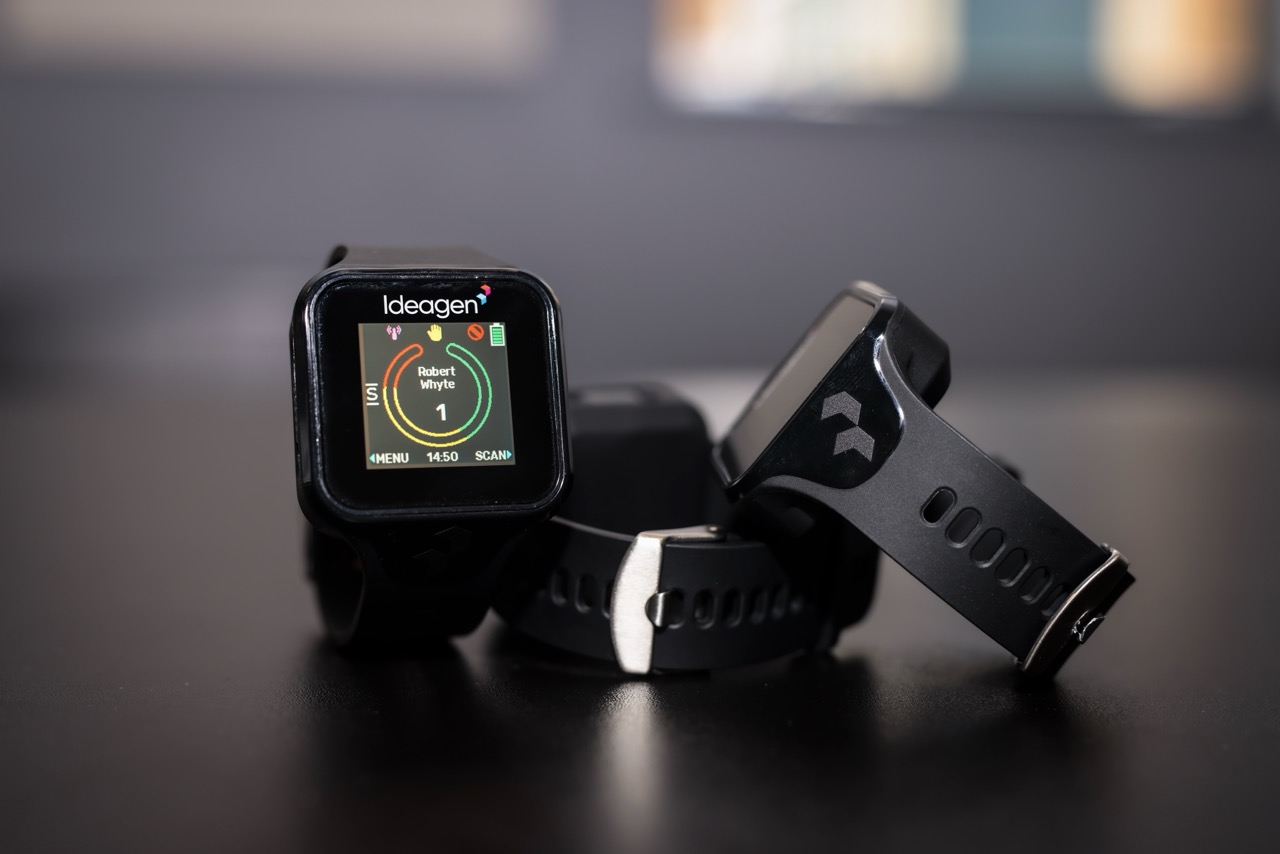
Yes. The Ideagen Wearable Safety ecosystem is designed to monitor multiple risk types from a single platform. The watch captures vibration exposure and proximity alerts simultaneously. The in-ear device monitors personal noise exposure in real time. The personal dust monitor records airborne particulate concentrations at the breathing zone. Data from all device types feeds into Ideagen Wearable Safety Analytics, where it can be reviewed at an individual worker level, a team level or across the whole organisation.
Still have questions?
Our team knows your industry. If your question isn't answered above, talk to us. No sales pitch, just answers.