



Environmental monitoring has a reputation for being complicated. Specialist equipment. Expert interpretation. Fragmented systems that require manual correlation before anyone can make a decision. For environmental managers at mining, construction and waste and wastewater operations, that complexity has long been accepted as an unavoidable part of the role.
It does not have to be.
Modern environmental monitoring platforms have fundamentally changed what is possible, not just in terms of what can be measured, but in terms of who can act on that data, how quickly and with how much confidence. The goal is not just compliance. It is making compliance straightforward for the entire operational team, not just the specialists.
The problem with complexity
The traditional approach to environmental monitoring involves multiple systems for multiple parameters. Dust data in one place. Noise data somewhere else. Odour complaints managed separately. Weather data pulled from a third-party source and manually cross-referenced with everything else.
This fragmentation creates three problems. First, by the time data from disconnected systems is brought together and interpreted, the environmental conditions that generated it have already changed. Second, the analysis requires specialist knowledge meaning operational decisions slow down while teams wait for expert sign-off. Third, gaps in coverage go unnoticed until a complaint arrives or a regulator asks for records that do not exist.
The result is an environmental management program that is reactive by design, because the tools it runs on were never built for proactive decision-making.
What easy environmental monitoring actually looks like
Easy environmental monitoring is not simpler monitoring. It is monitoring that is designed to translate complex environmental data into clear, actionable intelligence for everyone who needs it, in real time.
That starts with a unified platform that captures data from all relevant parameters in a single view. Noise, dust, vibration, air quality, VOCs, odour, water quality and weather, brought together so the environmental picture is always complete and always current, without manual correlation.
It continues with forecasting. When real-time monitoring data is combined with high-resolution weather modelling, it becomes possible to anticipate environmental conditions up to 72 hours ahead. For a mining operation, that means knowing before a shift begins whether dust conditions are likely to create compliance risk and targeting suppression accordingly. For a construction site, it means scheduling high-noise or high-vibration activity during windows least likely to impact neighbouring properties. For a waste management facility, it means anticipating odour events before they generate community complaints.
Forecasting turns environmental monitoring from a record-keeping function into an operational planning tool and that changes everything about how the compliance role feels day to day.
When something happens, know why immediately
The other area where modern monitoring platforms have changed the game is source attribution. When a high dust or odour reading occurs at a boundary monitor, the traditional response is an investigation, manually correlating data from multiple systems to identify the likely source. On a complex site with multiple emission sources, that takes time no one has.
Rapid reverse trajectory analysis traces a pollution event back through real-time meteorological data to identify the most probable source automatically, within seconds of an event being flagged. Arcs of influence mapping shows which emission sources are most likely contributing to conditions at specific receptor locations at any given time. For waste management operations, proprietary algorithms can pinpoint the exact source of odour issues, landfill gas and methane leaks regardless of site complexity.
The operational benefit is direct. Instead of investigating, your team acts. Instead of responding to a complaint without evidence, you respond with a scientific analysis that confirms or rules out your site as the source. That is a fundamentally different compliance posture and a fundamentally different community conversation.
Compliance reporting without the manual work
Automated reporting that generates accurate compliance outputs directly from monitoring data, configured to your regulatory obligations and delivered to regulators on a scheduled basis, removes one of the most time-consuming aspects of the environmental manager's role.
The monitoring record is always complete, always current and always audit-ready. When a regulator requests records or a complaint requires documentation, the evidence is already there. No manual reconstruction. No gaps to explain.
Community engagement that builds rather than repairs trust
When communities can access real-time environmental monitoring data through a public-facing portal, presented in a format that does not require technical expertise to interpret, the nature of community engagement changes. Complaint volumes reduce, conversations become more collaborative and when exceedances do occur, the operator's account of events is heard differently by a community that has seen consistent, transparent data over time.
Environmental monitoring does not have to be the most complicated part of running a heavy industrial operation. With the right platform, it can be the most reliable.
Want to go deeper?
Download our free eBook, Why continuous monitoring is still essential for environmental management, for a practical guide to what continuous monitoring delivers, what good infrastructure looks like and how to identify the gaps in your current program.
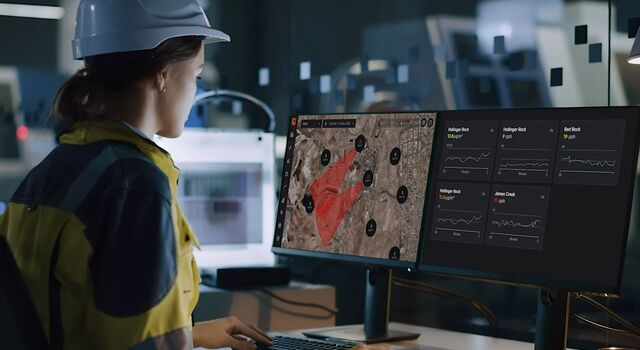
Why continuous monitoring is still essential for environmental management
Environmental monitoring has come a long way, with modern tools changing what is possible at industrial sites but the focus on tools like software leads to undervaluing what sits underneath it; the continuous, real-time capture of environmental data in the field. Learn more in this eBook.
Explore EHS solutions
Build better EHS processes, mitigate safety risks and protect employees with a unified solution for reporting incidents and managing safety.