



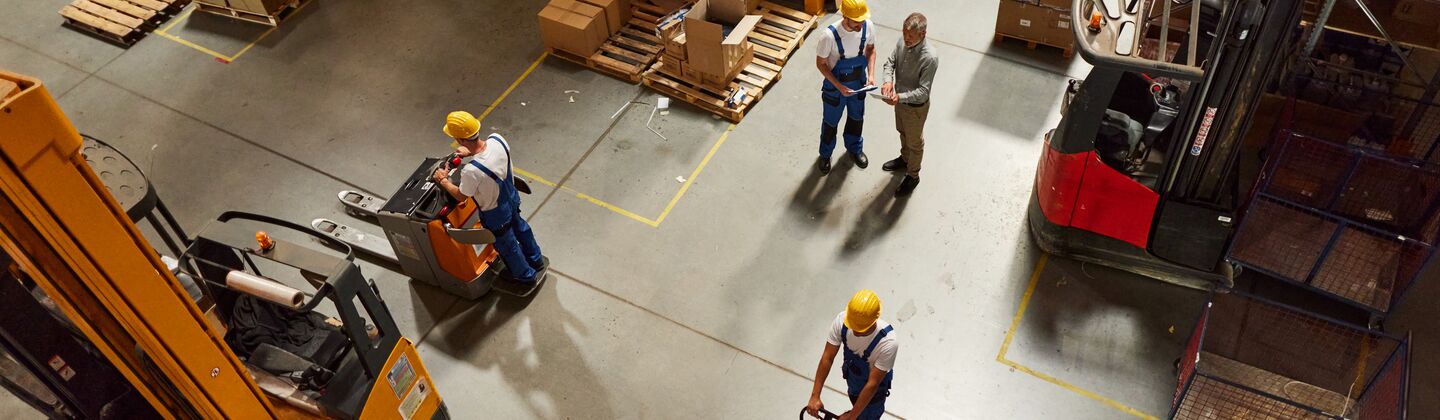
A hazard is anything with the potential to cause harm. Risk is the chance that the harm happens and how serious it would be. This guide explains the difference, the main types of workplace hazard, the controls that reduce them and how method statements, PPE, high-risk activities and lockout/tagout fit together.
What is a hazard?
A hazard is a source of potential harm to people, property or the environment. A wet floor, a noisy machine, a toxic chemical and a heavy load are all hazards. A hazard exists whether or not anyone is near it.
Hazards can cause injuries such as cuts and falls. They can also cause ill health such as hearing loss or lung disease, and some build up harm slowly over years.
Risk vs hazard
People often use the two words as if they mean the same thing. They do not. A hazard is the source of harm. Risk is the likelihood of harm combined with its severity.
| Factor | Hazard | Risk |
| Meaning | Something that can cause harm | The chance of harm and how bad it would be |
| Example | A spill of oil on a walkway | The chance someone slips and how badly they could be hurt |
| Can it be removed? | Sometimes, by eliminating the source | Reduced by controls but rarely zero |
| Question to ask | What could cause harm? | How likely is it and how serious? |
The same hazard can carry different levels of risk. A chemical stored in a locked, ventilated cabinet and used by trained staff carries less risk than the same chemical left open in a busy area. Controls change the risk even when the hazard stays.
How a risk assessment works
- Identify the hazards in each task or area
- Decide who could be harmed and how
- Rate the risk using likelihood and severity
- Choose controls and record them
- Review the assessment after incidents or changes
A risk assessment is the starting point for almost every other control in this guide. Ideagen risk assessment software gives teams a structured way to record assessments, assign actions and review them over time.
Types of workplace hazards
| Type | Examples | Possible harm |
| Physical | Noise, vibration, radiation, heat and cold | Hearing loss, burns, nerve damage |
| Chemical | Solvents, dusts, fumes, acids and gases | Poisoning, burns, breathing problems |
| Biological | Bacteria, viruses, mold and animal waste | Infection and allergic reactions |
| Ergonomic | Repetitive tasks, awkward posture and heavy lifting | Back pain and musculoskeletal disorders |
| Mechanical | Moving parts, unguarded machines and vehicles | Crushing, cuts, amputation |
| Electrical | Damaged cables, live parts and wet conditions | Shock, burns, fire |
| Fire and explosion | Flammable materials, ignition sources and dust | Burns, blast injuries |
| Psychosocial | Excess workload, bullying and lone working | Stress, anxiety and burnout |
| Environmental | Slippery surfaces, poor lighting and extreme weather | Slips, trips, falls and heat illness |
Most workplaces have several types at once. Look at tasks as well as locations, because many hazards only appear when work is under way.
The hierarchy of controls
The hierarchy of controls ranks ways to reduce risk from most to least effective. Start at the top and move down only when the higher option is not practical.
- Elimination: remove the hazard completely
- Substitution: replace it with something less hazardous
- Engineering controls: guards, ventilation and barriers
- Administrative controls: procedures, training, signs and job rotation
- PPE: protective equipment for the person as the last line of defense
Method statements: RAMS and SWMS
A method statement describes step by step how a task will be carried out safely. It is usually paired with a risk assessment.
- RAMS: risk assessment and method statement, used in the UK, often in construction and contracting
- SWMS: safe work method statement, used in Australia for high-risk construction work
What a method statement includes
- Description of the task and where it takes place
- Who is doing the work and what training they hold
- Hazards and risks identified
- Sequence of work steps with the controls for each
- Equipment, materials and PPE needed
- Emergency and rescue arrangements
- Supervision and sign-off
Brief everyone involved before work starts and make sure they sign to confirm they understand it. Update the document when the job changes. Contractors often provide RAMS or SWMS, so check them before work begins rather than filing them unread.
What is PPE?
PPE is personal protective equipment. It is anything worn or used to protect a person from a hazard. PPE does not remove the hazard. It only protects the wearer, so it comes last in the hierarchy of controls.
| Body area | PPE examples |
| Head | Hard hats and bump caps |
| Eyes and face | Safety glasses, goggles and face shields |
| Hearing | Earplugs and earmuffs |
| Lungs | Dust masks and respirators |
| Hands | Gloves suited to the hazard, such as cut-resistant or chemical-resistant |
| Feet | Safety boots with toe protection |
| Body | High-visibility clothing, coveralls and harnesses |
Getting PPE right
- Choose PPE that suits the specific hazard
- Make sure it fits the wearer
- Train people to put it on and take it off correctly
- Inspect it regularly and replace damaged items
- Provide it free of charge where the law requires
Common high-risk activities
Some tasks carry a higher chance of serious injury or death. They usually need a written plan and often a permit to work.
Confined spaces
A confined space is an enclosed or partly enclosed area that is not designed for people to stay in and can have dangerous conditions such as toxic gas or low oxygen. Examples are tanks, silos, pits and sewers. Avoid entry where possible. If entry is needed, test the air, use a permit, appoint an attendant and plan the rescue before anyone goes in.
Hot work
Hot work is any work that creates sparks, flames or heat, such as welding, cutting and grinding. The main risks are fire and explosion. Use a hot work permit, clear combustible materials, keep fire extinguishers close and keep a fire watch for a set period after the work ends.
Electrical work
Electrical work risks shock, burns and fire. Only competent people should work on electrical systems. Isolate and prove the equipment dead before starting. Use insulated tools and check portable equipment regularly.
Manual handling
Manual handling covers lifting, carrying, pushing and pulling. Poor technique causes back injuries and long-term muscle damage. Avoid manual handling where possible by using trolleys or hoists. Where it cannot be avoided, assess the load and the route, break loads down and train people in safe technique.
What is lockout/tagout?
Lockout/tagout (LOTO) is a procedure that keeps machinery from starting up or releasing stored energy while someone is servicing it. Energy sources are isolated and locked with a personal lock. A tag is attached to explain who applied the lock and why.
Basic lockout/tagout steps
- Prepare: identify every energy source, including electrical, hydraulic, pneumatic and gravity
- Notify: tell affected employees that the machine will be shut down
- Shut down: stop the equipment using normal controls
- Isolate: switch off or disconnect every energy source
- Lock and tag: apply personal locks and tags to each isolation point
- Release stored energy: bleed pressure, discharge capacitors or block moving parts
- Verify: try to start the machine to confirm it is isolated, then return the controls to off
- Restore: when work is done, check the area, remove locks and tags and tell affected staff before restarting
Only the person who applied a lock should remove it. In the US, OSHA sets lockout/tagout requirements under 29 CFR 1910.147. Other countries use similar isolation rules under different names.
Putting controls into practice
- Start with a risk assessment for every task
- Apply the hierarchy of controls and record the decisions
- Use method statements and permits for high-risk work
- Provide and maintain the right PPE
- Train workers and check that procedures are followed
- Review after incidents, near misses and changes to the work
Frequently asked questions
What is the difference between a hazard and a risk?
A hazard is the source of potential harm. Risk is how likely that harm is and how severe it would be.
What are the main types of workplace hazard?
The main types are physical, chemical, biological, ergonomic, mechanical, electrical, fire and psychosocial hazards.
Is PPE the best way to control a hazard?
No. PPE is the last resort in the hierarchy of controls. Eliminate the hazard or use engineering controls first where possible.
What is the difference between RAMS and SWMS?
RAMS is the UK term for a risk assessment and method statement. SWMS is the Australian term for a safe work method statement.
Explore EHS solutions
Build better EHS processes, mitigate safety risks and protect employees with a unified solution for reporting incidents and managing safety.