


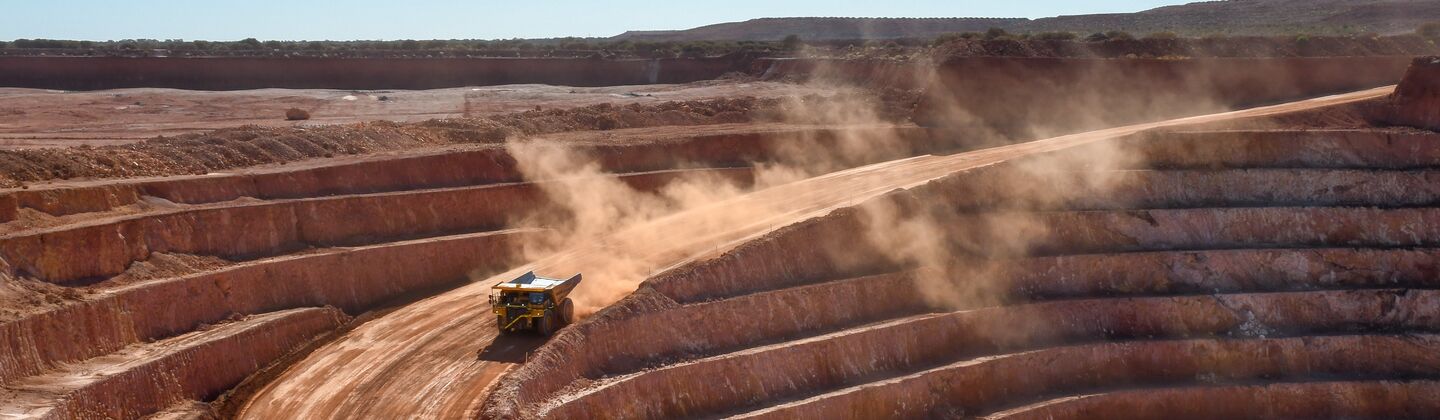
A periodic sample describes a few shifts. A mine site changes by the hour, with wind, equipment, blasting and activity all moving the risk.
On 1 December 2026, Workplace Exposure Standards (WES) become Workplace Exposure Limits (WEL) that duty holders must not exceed. Thirty-one substances gain a limit for the first time, including diesel particulate matter. Sampling and expert assessment remain the foundation for showing worker exposure. The operations best placed for the change add a continuous picture of site conditions alongside them: where contaminants are rising, what is driving them and how quickly teams can respond.
What are Workplace Exposure Limits (WEL)?
A Workplace Exposure Limit (WEL) is the maximum airborne concentration of a contaminant that a worker may be exposed to under the regulations. Limits are set from health evidence to protect most workers, and they must not be exceeded. From 1 December 2026, the WEL list replaces the WES list. Each limit takes one or more of three forms.
- TWA (time-weighted average): the average concentration over a standard eight-hour shift
- STEL (short-term exposure limit): the average over a short period, typically 15 minutes, to guard against acute effects
- Peak: a ceiling that must not be exceeded at any moment
A substance is within its limit only when every limit type it carries is met. On a site that changes by the hour, the short-term and peak limits matter because an eight-hour average can hide a spike.
Why the limits are changing
The change follows a review against health evidence that has emerged since the last comprehensive review in 2003. A limit is a legal ceiling, not a guarantee of safety, because some people can be affected below it. Many airborne contaminants cannot be seen or smelled, so exposure can go unnoticed without measurement.
A person conducting a business or undertaking (PCBU) must eliminate or minimise risk so far as is reasonably practicable and keep exposure below the limit. Doing that depends on knowing where and when exposure is likely to occur.
Assessing an individual’s exposure is the job of competent people using prescribed methods, such as personal sampling. Site monitoring complements that work by showing where and when conditions are building, so sampling, controls and response can be targeted.
What changes on 1 December 2026
The change is more than a rename. Four shifts matter most for mining.
- Diesel particulate matter gets a national limit. Measured as respirable elemental carbon, it is set at 0.01 mg/m³. It is the biggest change for diesel-intensive operations.
- Gases and metals tighten. Limits fall for carbon monoxide, nitric oxide and sulfur dioxide, the combustion and blast fume gases that matter underground and around plant. Manganese falls from 1 mg/m³ to 0.1 mg/m³ inhalable, with a new respirable limit of 0.02 mg/m³.
- Carcinogens move. Thirty-three non-threshold genotoxic carcinogens move to a separate list with no numerical limit, because no safe level can be set. The duty is to eliminate exposure so far as is reasonably practicable.
- Silica is not changing yet. Until further analysis is complete and ministers decide, the silica limit stays as it is in the current list. Silica risk management should continue as normal.
| Contaminant | Previously | From 1 December 2026 | How site data can help |
| Diesel particulate matter (respirable elemental carbon) | No national limit | 0.01 mg/m³ | Shows where fleet activity and poor dispersion concentrate, to guide ventilation review and where to sample. Exposure itself is assessed by sampling and laboratory analysis. |
| Nitric oxide | 25 ppm | 2 ppm | Shows gas build-up after blasting or in poorly ventilated areas, to support operational response. |
| Carbon monoxide | 30 ppm | 20 ppm | As above. |
| Sulfur dioxide | 30 ppm | 0.25 ppm | Shows emission and dispersion patterns around processing plant. |
| Manganese | 1 mg/m³ inhalable | 0.1 mg/m³ inhalable, 0.02 mg/m³ respirable | Mainly a personal sampling matter. Site data adds limited value. |
| Respirable crystalline silica | 0.05 mg/m³ | 0.05 mg/m³ (under review) | Shows where and when dust builds, to target suppression and controls. |
| Respirable coal dust | 1.5 mg/m³ | 1.5 mg/m³ | As above. |
Eight-hour TWA values. Check the full Safe Work Australia WEL list against every substance you use or generate.
Chapter 8A duties, NATA-accredited laboratory analysis and 30-year record retention do not change. Be ready, however, to explain how your site detects and responds to elevated conditions, and start by reviewing how yours does today.
Where continuous monitoring fits alongside sampling
Accredited sampling remains the reference method, and assessing worker exposure may require personal sampling, a competent hygienist and prescribed methods. But a periodic sample describes only a few shifts, and an eight-hour average can sit below the limit while short peaks go unseen. This is the shift-average blind spot.
Think of it as three jobs: assess (your hygienist and sampling), see (a continuous picture of site conditions) and act (controls and response). Environmental monitoring does the second, and makes the first and third more effective.
Illustrative scenario. A hygienist’s sample from yesterday shows an eight-hour average comfortably inside the limit. But on a cool, still morning, dust and exhaust pooled low in the pit and conditions peaked for twenty minutes before dispersing. The sample averaged it away. With real-time monitoring, weather, alerts and operational context in one view, the team could have seen conditions building and had time to act.
Ideagen Envirosuite adds that layer alongside sampling, not instead of it, combining real-time weather with predictive modelling, including 72 hour forecasting with accuracy down to 100m.
What environmental intellgence adds to your WEL readiness
Your contaminants, your hygienist and your controls are the foundation. Environmental intelligence works alongside them, showing where and when conditions are building so each can be targeted and tested.
- Lead time: Acting on forecasts rather than readings lets teams move activity or apply controls before conditions escalate.
- Targeted controls: Pinpointing the likely source behind elevated readings lets teams apply suppression and activity changes where they matter, which can reduce stoppages and cost.
- Targeted sampling: Data shows where and when to sample, so effort goes where risk is highest.
- One shared picture: Hygiene, ventilation, environment and operations teams share one view, which can also support licence and community monitoring.
- Worker-level data: Wearable exposure data sits alongside site monitoring, reducing manual checking and improving time to action. It supports analysis and does not replace prescribed methods. Learn more about Ideagen Exposure Intelligence capabilities.
Test your site against five areas
- Detect: Continuous visibility of dust, particulate matter, gases and weather across the site.
- Understand: Readings linked to meteorology, location, equipment and activity.
- Predict: Forecasts of conditions likely to raise risk before they arrive.
- Act: The likely source of high readings identified, and the right people warned before a threshold is reached.
- Demonstrate: Dashboards, trends and response records retained for governance and review.
Score your site. Download the WES to WEL readiness checklist and find your gaps.
Where does your site stand on WEL readiness
Sampling and expert assessment tell you what exposure was. A continuous picture of site conditions shows you what is building now.
Find your gaps with our checklist or book a WEL discovery workshop. Ideagen will review your monitoring alongside the new limits and show you what to fix first.
Your guide to Workplace Exposure Limits (WEL) readiness
Assess your preparedness for Australia's new Workplace Exposure Limits and understand the actions required to strengthen exposure management and stay ahead of compliance obligations.
Your guide to Workplace Exposure Limits (WEL) readiness
Assess your preparedness for Australia's new Workplace Exposure Limits and understand the actions required to strengthen exposure management and stay ahead of compliance obligations.
Is your mine ready for Workplace Exposure Limits?
Workplace Exposure Limits are raising expectations around exposure management. Discover what is changing, how it impacts mining operations, and how real-time environmental intelligence can support informed, proactive decision-making.