

An EHS management platform is software that centralizes incident reporting, hazard and risk management, audits, training and compliance records for environmental, health and safety obligations. For Australian regulated industries such as mining, construction, energy and utilities, it gives businesses one traceable record that shows they are meeting their work health and safety (WHS) duties.
What Australian WHS obligations require of businesses
The model Work Health and Safety Act, developed through Safe Work Australia, has been adopted in every Australian jurisdiction except Victoria, which operates under its own Occupational Health and Safety Act 2004. Under the model laws, a person conducting a business or undertaking (PCBU) must ensure, so far as is reasonably practicable, the health and safety of workers and others affected by the work.
Officers of the business also hold a duty of due diligence. In practice, leaders need current evidence of how risks are identified, controlled and reviewed, and regulators can ask to see it after an incident.
Where spreadsheets and paper processes fall short
Many organizations still run safety through paper forms, spreadsheets and email. That approach strains as sites, contractors and regulatory expectations grow.
- Incident and hazard reports reach the safety team late, or in inconsistent formats.
- Contractor credentials and inductions sit in separate files, so site access checks are manual.
- Corrective actions have no clear owner or due date and are hard to close out.
- Risk registers drift out of date because they are not linked to incidents and audits.
- Evidence for a regulator or ISO audit must be assembled by hand.
Core capabilities of an EHS platform
The table below sets out the main capabilities and the compliance question each one answers.
| Capability | What it does | Question it answers |
| Incident management | Captures events from the field through investigation to corrective action | Can we show how every incident was handled and closed? |
| Hazard and risk management | Records hazards, scores risks and links controls | Are risks identified and controlled consistently across sites? |
| Contractor and workforce management | Tracks credentials, inductions and site access | Is every contractor verified before arriving on site? |
| Permits, SWMS and pre-starts | Digitizes high-risk work approvals and pre-start checks | Was the right approval in place and the machine checked before work began? |
| Audits and inspections | Schedules audits and tracks findings to closure | Can we prove we act on audit findings? |
| Training and competency | Tracks inductions and training status | Are workers qualified for the tasks they perform? |
| Dashboards and reporting | Shows safety performance in real time | Does leadership see current risk exposure? |
Industries with the most to gain
| Industry | Typical EHS pressure |
| Mining | Dust monitoring, worker exposure monitoring, contractor volumes and remote sites |
| Construction | Inductions, SWMS, permits and many contractors on changing sites |
| Energy and utilities | Asset integrity, environmental impact and critical infrastructure risk |
| Government and public services | Safety of workers, contractors, visitors and the public across many sites |
| Healthcare and aged care | Psychosocial risk, incident reporting and duty of care |
The shift from reactive to proactive safety management
Reactive safety management records incidents after they happen. Proactive safety management uses hazard reports, near misses and audit findings to act before harm occurs. Connected software supports the second model because field reports, risk registers and corrective actions update one shared record.
The practical test is close-out time. A business that can show every incident, its investigation and the verified corrective action in one place is operating at an audit-ready standard.
How Ideagen EHS supports regulated industries
Ideagen EHS is a cloud-based environmental, health and safety management platform. According to Ideagen, it covers inductions, contractor management, incidents, SWMS, permits, pre-starts and actions in one system, and it serves construction, energy and utilities, government, mining and agriculture.
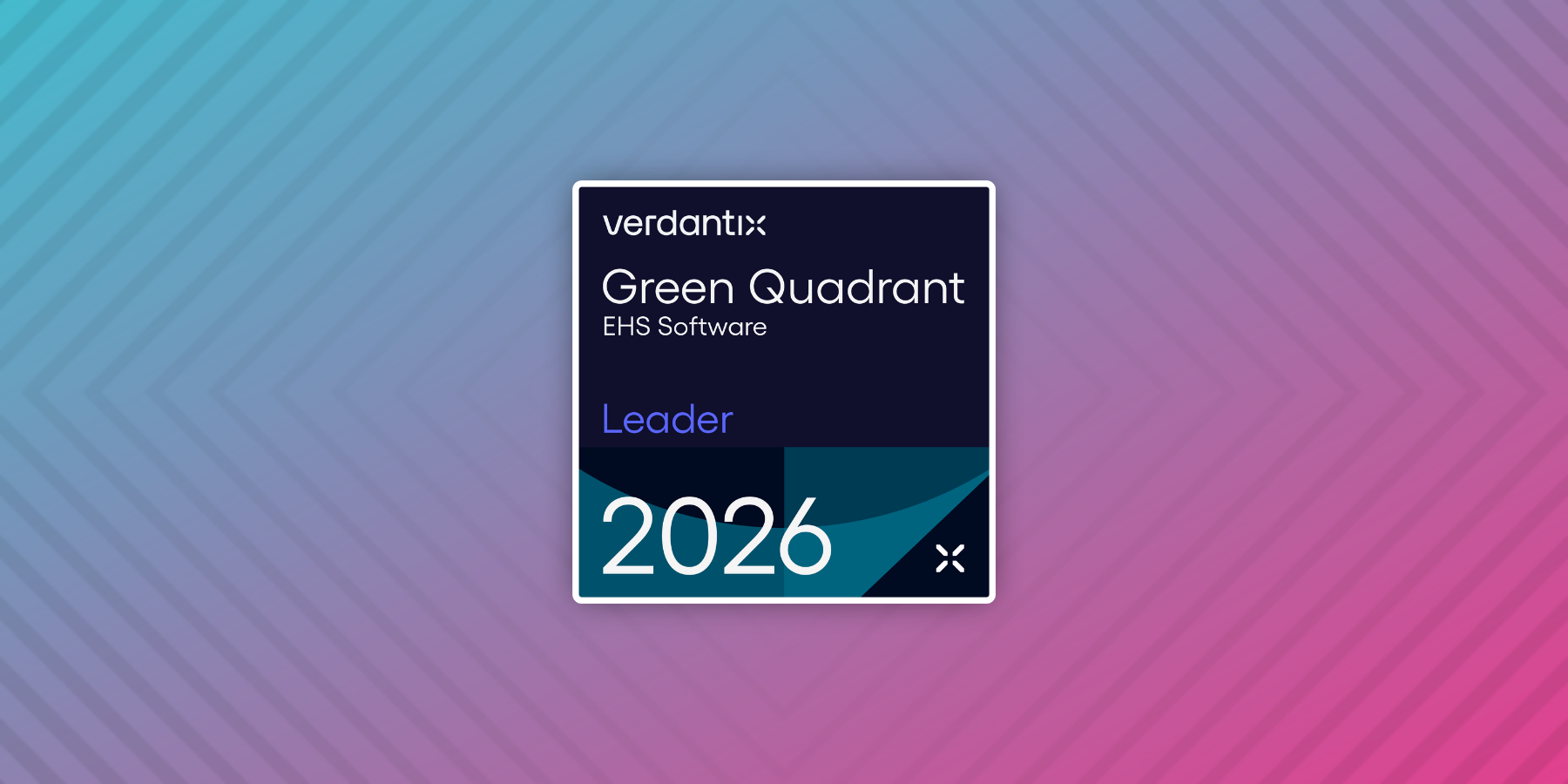
Verdantix positions Ideagen as a Leader for EHS software (Verdantix, Green Quadrant: EHS Software (2026), 21 September 2026). Ideagen states that its EHS Core offering includes risk registers aligned to ISO and WHS requirements, automated internal audit scheduling and real-time dashboards for management review evidence. It also reports that its EHS solutions support ISO 9001, 14001, 45001 and 31000.
Frequently asked questions
What is EHS management software?
EHS management software is a system that manages incidents, hazards, risks, audits and training so an organization can evidence compliance with environmental, health and safety requirements.
Does WHS law require specific software?
No. WHS law sets duties, not tools. Software is one way to evidence that risks are identified, controlled and reviewed.
What is the difference between EHS and WHS?
WHS is the Australian legal term for work health and safety. EHS is the wider discipline, which also covers environmental management.
Can an EHS platform help with ISO 45001?
Yes. Centralized incident, risk, audit and training records give the evidence ISO 45001 audits ask for, though certification still depends on the organization's management system. For a broader overview, see our Guide to ISO certifications.
Questions to answer before you shortlist an EHS platform
List the sites, contractors and regulations your business must manage, then identify where evidence is hardest to retrieve today. Test each shortlisted platform against those gaps, and ask vendors how field teams will capture reports, how contractor checks work and how findings are tracked to close-out.
Request a demo to see how Ideagen EHS fits your sites.
Explore EHS solutions
Build better EHS processes, mitigate safety risks and protect employees with a unified solution for reporting incidents and managing safety.