



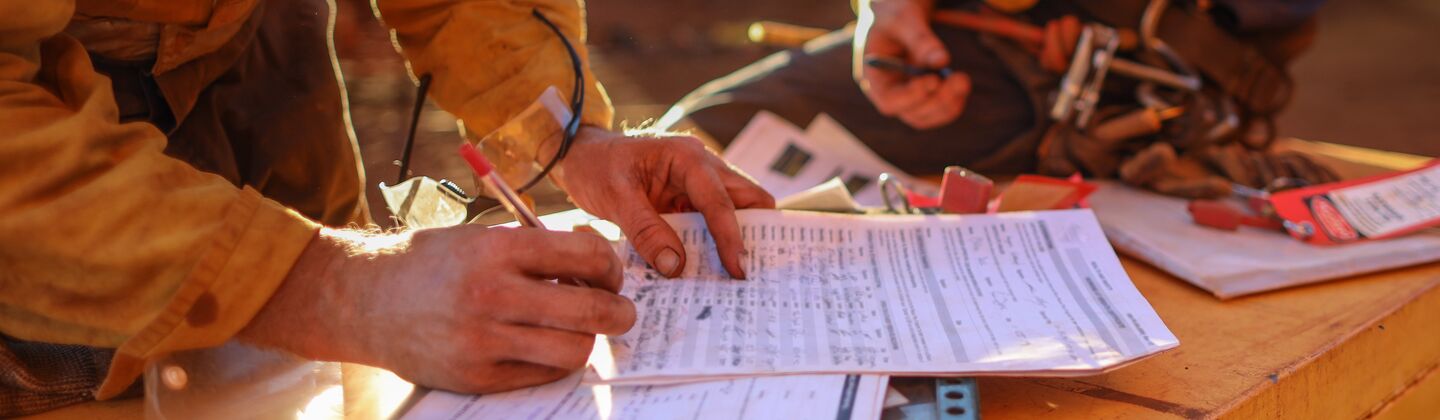
A permit to work (PTW) is a formal written authorization that allows a specific high-risk job to start under set conditions. It names the work, the hazards, the controls and the people responsible. This guide explains what a permit to work is, when you need one, how the process works and what makes it fail.
What is a permit to work?
A permit to work is a documented control that confirms a hazardous task has been assessed, that safeguards are in place and that a competent person has approved the work before it begins. It is not a risk assessment and it is not a method statement. It sits on top of both and gives a clear go or no-go decision for one job, in one place, for a limited time.
A permit to work also keeps people who share a site informed. Operations staff, maintenance teams and contractors can all see what work is under way and what conditions apply.
When do you need a permit to work?
Use a permit when a task could cause serious harm if the normal controls fail or if different groups of people could affect each other. Typical examples:
| Permit type | Typical work | Main hazard |
| Hot work | Welding, cutting and grinding | Fire and explosion |
| Confined space entry | Tanks, silos, pits and vessels | Toxic gas and low oxygen |
| Electrical isolation | Work on live or recently live equipment | Shock and arc flash |
| Work at height | Roofs, scaffolds and elevated platforms | Falls |
| Excavation | Digging near services or in unstable ground | Collapse and striking services |
| Line breaking | Opening pipes or vessels that held hazardous substances | Release of chemicals or pressure |
| Mechanical isolation | Maintenance on machinery with stored energy | Unexpected start-up and crushing |
Your site should list which tasks need a permit and keep that list under review. Many sites also require a permit for any non-routine job done by contractors.
Permit to work and the law
Few laws use the phrase permit to work, but regulators expect safe systems of work for high-risk tasks and a permit is a common way to meet that duty. Requirements differ by country and industry, so check the rules that apply to each site.
How the permit to work process works
- Request: the person who will carry out the work, or their supervisor, describes the job, the location and the time needed
- Assess: a competent person visits the site, checks the hazards and confirms the controls needed
- Prepare: the area is made safe, for example by isolating energy, testing the air, clearing flammables or setting up barriers
- Authorize: an authorized person checks the preparation and signs the permit
- Brief: the issuer and the workers go through the permit together, and the workers sign to confirm they understand it
- Work: the job is done within the limits on the permit and the permit stays at the work location
- Change or stop: if conditions change or the scope grows, work stops and the permit is reviewed or reissued
- Hand back: when work ends, the workers sign off, the area is checked and the permit is closed
- Restore: isolations are removed and equipment returns to service only after all permits for it are closed
What a permit should include
- Description and exact location of the work
- Start and end times and the permit validity period
- Hazards identified and the controls required
- Isolations and tests carried out, such as gas readings
- PPE and equipment required
- Emergency and rescue arrangements
- Names and signatures of the requester, issuer and workers
- Cancellation or handback details
Key roles in a permit to work system
| Role | Main responsibility |
| Requester | Describes the job and requests the permit |
| Issuer or authorizing person | Checks the site and controls and approves the permit |
| Competent person or specialist | Carries out tests or isolations, such as gas testing or electrical isolation |
| Workers and contractors | Follow the permit and stop work if conditions change |
| Site or area manager | Makes sure permits are controlled and conflicting jobs are separated |
Train issuers and make sure they have the authority to refuse a permit. A permit system only works when people feel able to say no.
Common permit to work failures
- Permits signed without a site visit
- Generic wording that does not describe the actual job
- Permits left open after work finishes
- Workers who never read the permit or attend the briefing
- Conflicting jobs in the same area with no coordination
- Poor handover between shifts
- Paper permits that are lost, illegible or out of date
Audit a sample of permits regularly. Look at whether the controls on the permit were really in place and learn from near misses involving permitted work.
Paper vs digital permits
Paper permits are simple to start with but hard to track across a large site. Digital systems can show live permit status, prevent clashes between jobs and keep a searchable record. Ideagen's article on permit to work management software for industrial facilities looks at how digital permit processes can support this work. Whichever format you use, the discipline is the same: a competent check, clear controls and a formal close-out.
Frequently asked questions
What is the difference between a permit to work and a risk assessment?
A risk assessment identifies hazards and controls in general. A permit to work authorizes one specific job at a specific time and place once the controls are confirmed in place.
Who can issue a permit to work?
A trained and authorized person who understands the work area and the hazards can issue it. The person should be independent of the work team where possible.
How long is a permit to work valid?
Validity is set by the permit and is usually a single shift or day. If the work continues, review and reissue the permit.
Is a permit to work a legal requirement?
Not always by name. Many regulators expect a safe system of work for high-risk tasks, and a permit is a common way to meet that expectation.
Explore EHS solutions
Build better EHS processes, mitigate safety risks and protect employees with a unified solution for reporting incidents and managing safety.