



Down to the root of EUDR readiness
The EU Deforestation Regulation asks one question: can you prove where your cocoa, coffee, palm oil, cattle, soya, rubber or wood came from — down to the exact plot of land. This guide walks you through how to get there before the December 2026 deadline by leveraging supply chain visibility solutions.
What's inside
- Are you actually in scope? A commodity-by-commodity checklist — including the derived products and indirect routes (like animal feed) that catch teams off guard
- What "geolocation data" really means — why polygon coordinates to six decimal places matter, and where most supply chains hit their first obstacle
- How to build a due diligence statement — what to collect, from whom, and who in your supply chain actually has to file it
- Supplier risk in practice — using certification schemes like FSC, RSPO and Rainforest Alliance as a shortcut, not a substitute
- What changed in the May 2026 simplification review — what's settled, what's still moving, and what was never up for debate
- How to build a compliance program that outlasts EUDR — so the same data foundation carries you into whatever regulation comes next
Your supply chain is deeper than your first-tier supplier
Plot-level geolocation data typically sits furthest from the buyer — with the smallholder or first-tier aggregator, not with the organization trying to report it. If your visibility stops at the supplier you buy from directly, you cannot prove what's actually behind your product.
Enforcement starts December 2026
December 30, 2026 is the mandatory date for medium and large operators. The December 31, 2020 deforestation cut-off either your supply chain data already proves you meet, or it doesn't — there's no partial credit for organizations still mapping their supply base when the deadline lands.
Due diligence sits with whoever places it on the market first, not with everyone
Only the operator first placing a commodity on the EU market has to complete the full due diligence statement — downstream operators can reference it instead of duplicating the work. Knowing where you sit in that chain determines exactly what evidence you're on the hook for.
The review didn't loosen anything that mattered
The European Commission's May 2026 simplification review confirmed the regulation will not be reopened. The core commodities, the December 31, 2020 deforestation cut-off, and the requirement for plot-level geolocation data all stayed exactly as they were — only the edges were refined. Organizations that paused activity waiting for this review are now behind, not ahead.
Why it matters now
The obligation becomes mandatory December 30, 2026 for medium and large operators, and June 30, 2027 for micro and small operators. The cut-off date for deforestation — December 31, 2020 — isn't a target to work toward. It's a line your data either already proves you meet, or it doesn't.
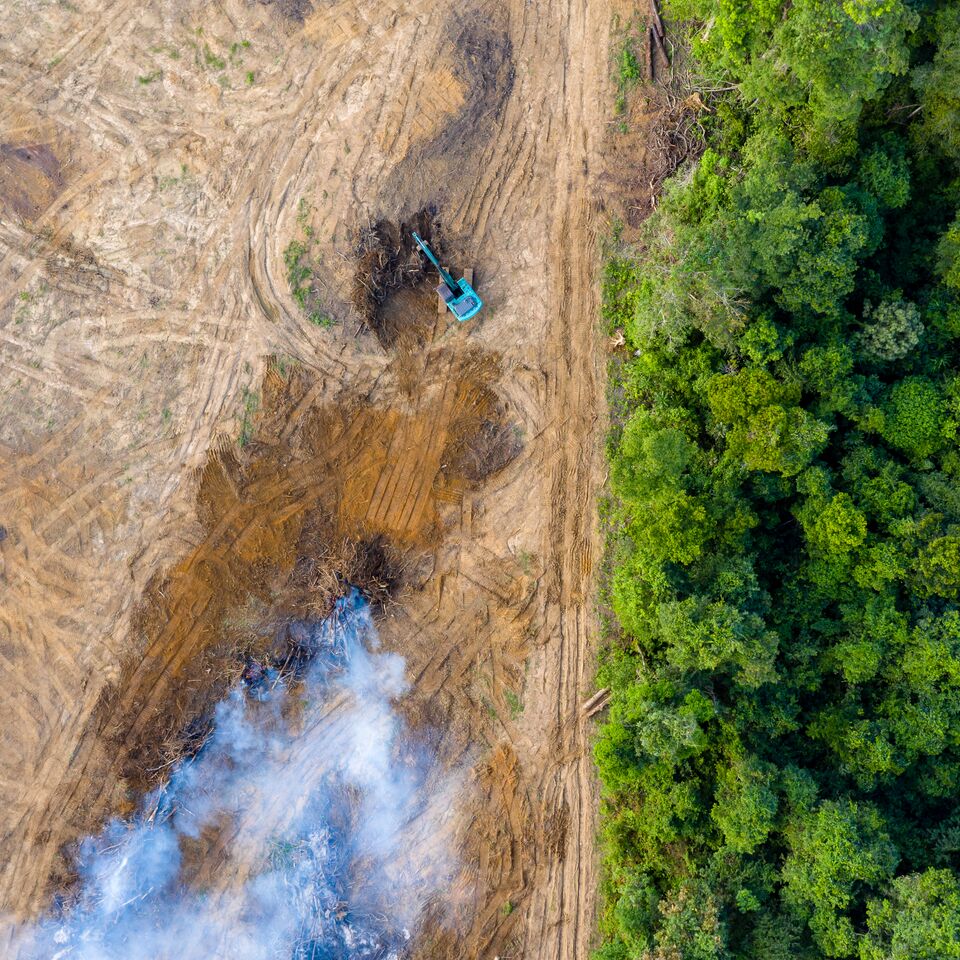
Stop treating deforestation risk like a sustainability side project.
Download the guide and see exactly what EUDR compliance takes — from scope to due diligence to a system of record that scales beyond this one regulation.